Distracted Driving in Fleets: Causes, Risks and How to Reduce Them
A quick glance at a notification. A sip of coffee at a red light. A call from the office about the next job. None of these feel dangerous in the moment. But each one pulls a driver’s attention away from the road.
For fleet managers, distraction is one of the most common risks drivers face, and one of the most preventable. This guide covers what counts as distracted driving, what Canadian law says, and the practical steps that make a real difference.
What Is Distracted Driving?
Distracted driving is anything that takes a driver’s eyes, hands or mind away from the road. It isn’t limited to phones.
TIRF notes that while phones usually get the blame, navigation systems, entertainment systems, eating and talking with passengers can also play a part in fatal collisions.
For fleet drivers, the list often grows. Calls from the office, customer messages and dispatch apps all add to the pressure.
Distracted Driving Statistics in Canada
Distraction remains one of the biggest factors in road deaths across the country. New data from the Traffic Injury Research Foundation (TIRF), published in 2026, found:
- Road deaths involving at least one distracted driver fell to 322 in 2023, down from 389 in 2018.
- Even so, distraction was still linked to more than one in five (22.7%) of all road deaths in 2023.
- Between 2019 and 2023, around one in six (15.1%) drivers killed in collisions were identified as distracted.
Commercial drivers are especially exposed. Earlier TIRF research found fatally injured drivers of heavy trucks and tractor trailers were distracted in 25.6% of cases, compared with 16.5% of car drivers.
At a provincial level, the numbers are just as stark. Ontario data shows more than 30,000 collisions involved distracted or inattentive drivers in 2022, leading to nearly 11,000 injuries and 100 deaths.
Canadian Cellphone and Distracted Driving Laws Explained
In Canada, distracted driving laws are set by each province and territory. Fines, demerit points and suspensions vary, so fleets running across provincial lines need to know the rules in every area they cover.
Ontario has some of the toughest rules in the country, and it’s a useful example of how strict the laws can be. While driving, including when stopped in traffic or at a red light, it’s illegal to use a handheld phone to text or dial, use a handheld entertainment device, have a non driving display screen visible, or program a GPS by hand.
For drivers with a full licence, the penalties for a first conviction in Ontario include:
- A fine of $615 if settled out of court, or up to $1,000 if the case goes to court
- Three demerit points
- A 3 day licence suspension
Repeat offences cost far more. A third conviction can bring a fine of up to $3,000, six demerit points and a 30 day suspension.
Is Using a Hands Free Phone While Driving Safe?
Hands free is legal, but it isn’t a free pass. In Ontario, drivers can still be charged with careless driving if any kind of distraction puts others at risk, including hands free devices. A careless driving conviction can mean six demerit points, fines of up to $2,000, up to six months in jail and a licence suspension of up to two years.
What Are Employers’ Responsibilities for Drivers at Work?
Fleet managers carry responsibility too. WorkSafeBC makes clear that an employer’s legal duty to provide a safe workplace includes any vehicle being driven for work. It also advises employers not to expect drivers to respond to calls or messages straight away while on the road.
Occupational health and safety rules vary by province, so check the requirements wherever your drivers operate.
Most Common Distractions for Fleet Drivers
Every fleet is different, but these are the distractions that come up again and again.
Cellphones and apps
Texts, social media and navigation apps are the obvious culprits. Even a quick glance at a notification means travelling some distance without watching the road.
Calls from dispatch or customers
Drivers often feel pressure to answer straight away. If the business expects instant replies, drivers may feel they have no choice.
In cab technology
Adjusting GPS units, touchscreens and radios all take eyes and hands away from driving. Setting these up before the trip starts helps.
Eating, drinking and smoking
Busy schedules mean lunch often happens in the cab. These habits pull attention from the road and can still lead to a careless driving charge.
Fatigue
Early starts, long shifts and tight delivery windows wear drivers down. A tired driver is slower to react and more likely to lose focus.
Winter weather
Snow, ice, freezing rain and short daylight hours demand extra concentration. Any other distraction becomes more dangerous when conditions are already difficult.
How to Prevent Distracted Driving in Your Fleet
Rules on their own rarely change behaviour. The fleets that see results combine clear policy with the right tools and regular conversations.
Create a Cellphone Policy for Drivers
Spell out what drivers can and can’t do. Cover handheld use, hands free calls and when drivers should pull over. Make sure dispatch and office staff follow it too, so drivers aren’t pressured to pick up.
Plan Schedules Around Hours of Service and Breaks
Commercial drivers must follow hours of service rules. Under the Ministry of Transportation’s hours of service guidance, a driver cannot drive more than 13 hours in a day and must have 10 hours off duty.
Shorter breaks matter too. CAA South Central Ontario recommends drivers schedule a break every two hours and find a safe place to pull over if they feel drowsy. Build these into job schedules so drivers don’t feel they’re falling behind by stopping.
Carry Out Pre Trip Inspections
A dashboard full of warning lights is a distraction in itself. Regular pre trip checks help drivers spot and report defects before they set off.
Encourage Drivers to Report Near Misses
Drivers know where the risks are. Create a culture where they can raise concerns, report near misses and suggest changes without worrying about blame.
Use Dash Cam Footage for Driver Coaching
Video gives you real examples to talk through. Used fairly, it helps drivers see their own habits and understand why changes matter.
How AI Dash Cams Reduce Distracted Driving
A driver facing camera changes behaviour simply by being there. But the latest systems go further.
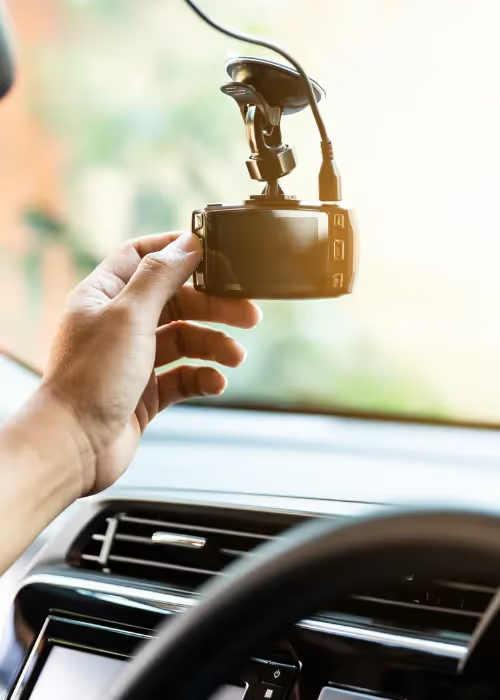
With RAM Live connected dash cams, you get front and driver facing cameras, instant alerts when driving events occur and access to footage through the web portal and app.
Optional AI driver monitoring detects:
- Phone use
- Drowsiness and distraction
- Smoking
- Driver absence
When risky behaviour is spotted, the driver hears an in cab audio alert straight away. You receive a notification at the same time, so you can step in if a pattern starts to form.
Fleet Safety Results from RAM Customers
Hydrogreen Irrigation, an Ontario irrigation company, introduced AI connected dash cams after experiencing vehicle accidents in the past. President Brandon Happeney said: “They have AI that tells people when they’re on their phone, beeps at them. They send me alerts when people are speeding, when there’s excessive braking... and it’s a good way to keep everybody in check.”
Alongside dash cams, Hydrogreen uses RAM vehicle tracking to see where vehicles are in real time and monitor driver behaviour across multiple job sites.
Safe Driving Tips for Fleet Drivers
Pin these up in the yard or add them to your driver handbook:
- Put your phone on driving mode or out of reach before you set off
- Set up your GPS and radio before moving
- Pull over somewhere safe and legal to make or take calls
- Eat and drink during breaks, not on the move
- Take a break every two hours on long trips
- If you feel drowsy, find a safe place to stop. Don’t push on
- Allow extra time and attention in winter conditions
- Tell your manager if a schedule doesn’t leave enough time
Reduce Distracted Driving Across Your Fleet
Distracted driving isn’t just about phones. Calls from dispatch, in cab tech, eating on the go, tiredness and winter weather all play a part. And for fleet drivers juggling tight schedules, the pressure to multitask is constant.
The good news is that most distractions can be reduced with the right approach:
- Set clear rules on phone use that apply to drivers and office staff alike
- Plan realistic schedules that respect hours of service and include regular breaks
- Keep vehicles well maintained so drivers aren’t distracted by faults
- Coach drivers using real footage, focusing on improvement rather than blame
- Use technology that spots risky behaviour as it happens
That last point is where AI dash cams make the biggest difference. Instead of finding out about a problem after a collision, your drivers get an alert in the cab the moment their attention slips. You’re notified at the same time, so small habits can be tackled before they turn into collisions, claims or demerit points.
Want to see how it works? Book a demo of our AI dash cams and find out how RAM can help your drivers stay focused, safe and on the right side of the law.
Distracted Driving FAQs
Can drivers use a phone while stopped at a red light in Canada?
No, drivers cannot use a handheld phone while stopped at a red light in most provinces. In Ontario, for example, distracted driving laws apply while stopped in traffic or at a red light.
Is it legal to use a phone in a mounted holder while driving?
Yes, it is legal to use a phone in a mounted holder in Ontario, as long as it’s used correctly. The device must be secure, and drivers can only touch or press a button to make, answer or end a call.
Is eating while driving illegal in Canada?
No, eating while driving is not specifically illegal under Ontario’s distracted driving law. However, drivers can still be charged with careless or dangerous driving if eating, drinking, grooming or smoking distracts them.
Can drivers use a phone to call 911 while driving?
Yes, drivers can use a phone to call 911 in an emergency. Ontario advises pulling off the road to a safe area to make the call.
How many hours can commercial drivers drive in a day in Canada?
Commercial drivers in Canada can drive a maximum of 13 hours in a day. They must also have at least 10 hours off duty in a day.
Can AI dash cams detect phone use while driving?
Yes, AI dash cams can detect phone use while driving. RAM Live AI monitoring spots phone use, drowsiness, distraction, smoking and driver absence, and alerts the driver in the cab in real time.
About the author
Michael Hoyle is the Head of Account Management at RAM, where he leverages over 7 years of industry experience to drive customer success and operational excellence.
With a deep understanding of job management solutions and fleet tracking technology, Michael has established himself as a trusted leader in the telematics space.
His customer-centric approach and analytical mindset have helped countless businesses optimize operations, reduce costs, and improve efficiency.
Reduce costs, improve visibility, and keep your business running efficiently with RAM solutions.