Telematics Explained for Canadian Fleets
Each time one of your vehicles moves, it produces useful information: where it went, how fast it travelled, how long it idled and whether the engine flagged a fault. Without the right vehicle tracking system, most of that information disappears the moment the trip ends.
Telematics captures that information and turns it into something you can act on. This guide explains what telematics is, how it works and what it can do for a business of any size.
What Is Telematics?
Telematics is the technology that collects data from a vehicle and sends it back to you over a cellular network. The name comes from joining two words: telecommunications and informatics.
A small device fitted to each vehicle records where it is, how it is being driven and how the engine is performing. You then see that information on a dashboard or mobile app.
Is telematics the same as GPS tracking?
Not quite. GPS tracking tells you where a vehicle is. Telematics uses that location data too, but adds driving behaviour, engine health, fuel use and distance driven. Think of GPS tracking as one part of a wider telematics system.
How Does Telematics Work?
Most systems follow the same four steps:
- Collect: a tracker in the vehicle records location, speed and movement, along with engine data if it connects to the diagnostics (OBD) port.
- Send: the data travels over a cellular network to a secure server.
- Process: software turns raw data into reports, maps and alerts.
- Deliver: you view everything through a web portal or the RAM vehicle tracking app, wherever you are.
What Data Does Telematics Collect?
A typical system records:
- Live location and full trip history
- Speed, harsh braking, rapid acceleration and sharp cornering
- Idling time and stop durations
- Distance driven and fuel use
- Engine health and battery data from the OBD port
Each piece of data on its own is useful. Together, they show you how your whole fleet is really performing.
Key Benefits of Telematics for Your Business
See every vehicle on one screen
Live tracking shows where every vehicle is right now. You can give customers accurate arrival times and send the nearest driver to urgent jobs.
Polygon geofencing alerts you when a vehicle enters or leaves a site, yard or customer address.
Support safer driving
Driving is one of the biggest risks employees face at work. In Ontario, motor vehicle incidents were the leading cause of work related deaths every year from 2011 to 2020, accounting for 31% of allowed traumatic fatality claims according to WSIB data.
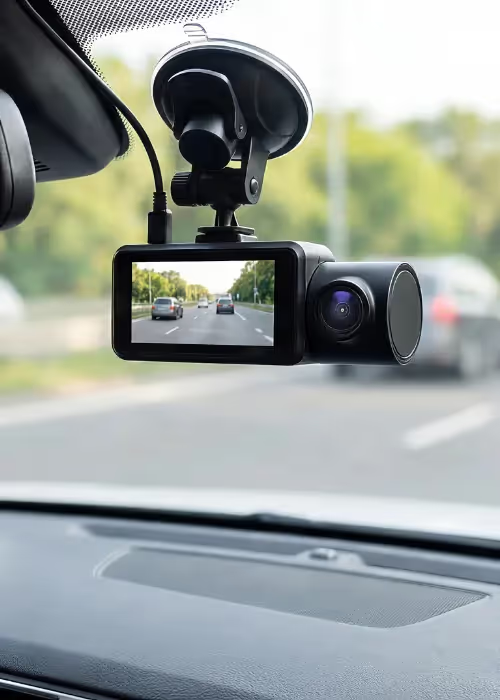
Alerts for speeding, harsh braking and sharp cornering show where coaching is needed. Connected dash cams add footage when something goes wrong.
Spend less on fuel
Idling is an easy place to start. Natural Resources Canada says that idling for more than 10 seconds uses more fuel than restarting the engine, and recommends switching off if you'll be stopped for over a minute outside of traffic. Several Canadian cities, including Vancouver, Edmonton, Toronto and Montreal, also have idling bylaws. Idling reports show which vehicles are wasting fuel.
Coaching drivers away from harsh acceleration and braking saves fuel too. RAM customers save an average of 15% on fuel.
Catch maintenance issues early
Vehicle health tracking reads engine health, battery condition and fault codes from the OBD port. You can fix small faults before they become breakdowns and plan service around real distance driven.
Protect vehicles from theft and misuse
Telematics shows when and where every vehicle is used, so after hours trips and unauthorized use stand out. If a vehicle is stolen, live location data gives police an exact position to work from.
Read our guide on how tracking protects against theft for more information.
Cut admin and stay compliant
Automated reports replace paper logs and manual trip sheets. Under federal hours of service rules, commercial drivers cannot drive after 13 hours of driving in a workshift. RAM's ELD solution records hours of service automatically for Canadian fleets.
Real Results: Hydrogreen Irrigation
Hydrogreen Irrigation started as a one person business in 2007. It has since grown into a major name in Ontario's irrigation industry, with more vehicles, more job sites and more crews to manage.
Before RAM, keeping track of the fleet meant manual check ins and regular site visits. President Brandon Happeney added vehicle tracking and AI connected dash cams, giving him a live view of every vehicle from one app.
The results speak for themselves:
- No more evening site checks for Brandon or his foremen
- Every vehicle visible in one place, without calling crews for updates
- Instant alerts for phone use, speeding, excessive braking and high engine revs
- Up and running in about a week, with a smooth installation
"I can manage everything from one hub without calling people or checking sites," Brandon says.
Read the full Hydrogreen Irrigation case study
Common Concerns About Telematics
"My drivers won't like being monitored"
Tracking work vehicles is legal in Canada when it's done for clear business reasons. Under PIPEDA, the Privacy Commissioner of Canada has accepted GPS tracking for purposes such as dispatching and finding missing vehicles, while warning against using it for more than its original purpose. In Ontario, employers with 25 or more employees must also have a written electronic monitoring policy.
RAM's privacy switch also lets drivers switch off location tracking outside work, so only total distance is recorded.
"It seems complicated"
It doesn't need to be. Plug in trackers fit straight into the vehicle's port with no wiring or tools. Hardwired trackers take about 30 minutes per vehicle to install professionally. Once set up, the dashboard shows what you need in a few clicks.
"We're too small for telematics"
Small fleets often see the quickest benefits because every vehicle counts. Hydrogreen began as a one person operation, and the same tools have supported it as it grew. Whether you run three vehicles or three hundred, the same savings on fuel, admin and downtime apply.
"It costs too much"
Look at what you are already losing to wasted fuel, unplanned repairs and time spent chasing drivers. For many fleets, the savings cover the cost of the system. You can check current options on the pricing page.
Which Industries Use Telematics?
Telematics works for any business that relies on vehicles. Some of the most common users include:
- Construction: tracking trucks and heavy equipment across multiple sites
- Delivery and logistics: giving customers accurate arrival times
- Field services and trades: sending the nearest technician to the next job
- Trucking: monitoring hours of service on long routes
- Utilities: managing service calls and keeping vehicles maintained
Get Full Visibility of Your Fleet With RAM
Telematics turns everyday vehicle data into decisions that save money and protect your drivers. You can see where vehicles are, how they are driven and when they need attention, all from one place. RAM has been in business for over 20 years, and thousands of businesses across Canada rely on us today, backed by a support team based in Ontario.
Contact us for a free, no obligation quote to see how RAM can cut costs and improve safety across Canada.
Frequently Asked Questions
What is the difference between GPS tracking and telematics?
GPS tracking shows where a vehicle is. Telematics combines that location data with driving behaviour, engine health, fuel use and distance driven to give a full picture of fleet performance.
Is telematics worth it for small fleets?
Yes, telematics is worth it for small fleets. Even with a handful of vehicles, it can reduce fuel waste, prevent unauthorized use and make fleet maintenance easier to plan.
What data does a telematics system collect?
A telematics system collects location, speed, trip history, harsh braking, acceleration and cornering, idling time, distance driven, fuel use and engine diagnostics.
Is it legal to track company vehicles in Canada?
Yes, it is legal to track company vehicles in Canada, as long as there is a clear business reason. Employers should tell drivers what is monitored and why, in line with guidance from the Privacy Commissioner of Canada.
Can telematics help with insurance claims?
Yes, telematics can help with insurance claims. Location data and dash cam footage provide evidence of what happened, which can help settle disputes about who was at fault.
Does telematics work for electric vehicles?
Yes, telematics works for electric vehicles. Alongside location and driving data, RAM can show battery levels, charging status and range.
About the author
Richard Blown is Chief Technology Officer at RAM, where he leads product innovation and technical strategy.
With over 25 years of experience in fleet telematics and connected vehicle technology, Richard has pioneered solutions that bridge the gap between theoretical safety improvements and practical business benefits.
His hands-on approach to product development ensures RAM's solutions solve real-world problems faced by fleet operators across Canada.
Reduce costs, improve visibility, and keep your business running efficiently with RAM solutions.