How Dash Cameras Help Ensure Road Safety
Road traffic accidents remain one of the leading causes of death globally, with approximately 1.19 million fatalities every year and up to 50 million injuries, according to the World Health Organization.
For fleets, ensuring road safety has become more critical than ever. Fleet managers must implement comprehensive safety measures, including regular vehicle maintenance, driver training, and most importantly, advanced safety technology like dash cams.
The Power of Dash Cams in Fleet Management
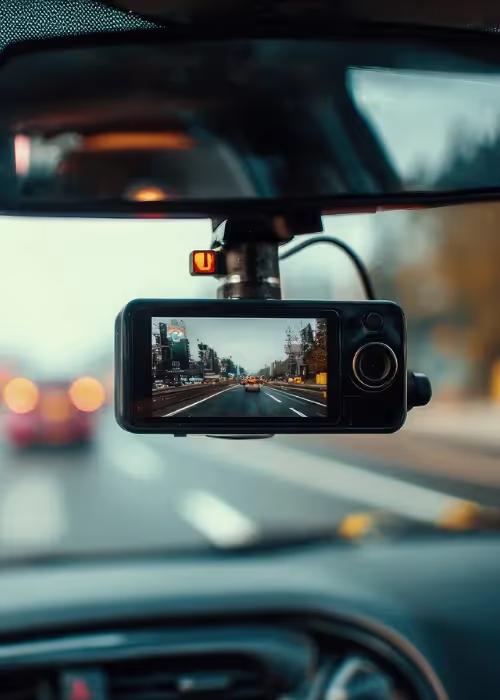
Dash cams have emerged as essential tools for modern fleet operations. These compact devices mounted on vehicle dashboards capture both on-road and behind-wheel video footage, providing unbiased context about driving conditions and safety-related events. Unlike other fleet technologies, dash cams offer visual documentation that proves invaluable during incident investigations.
Real-Time Monitoring and Incident Alerts
Our advanced connected dash cams deliver high-quality video footage in real-time, transforming how fleet managers respond to road incidents:
- Instant collision detection alerts managers the moment an impact occurs.
- Remote video access allows immediate assessment of any situation.
- Comprehensive footage captures both external road conditions and driver behavior.
- Evidence preservation secures critical documentation for insurance claims.
- Location tracking through built-in G-sensors identifies exactly where incidents occur.
- Operational visibility helps identify unauthorized routes or causes of unexpected delays.
Identifying and Correcting Driver Behavior
The majority of road accidents involve human error factors. Dash cams play a crucial role in addressing these driving behavior challenges:
- Automatic detection of aggressive or unsafe driving patterns.
- Behavior analytics that identify trends across individual drivers and fleets.
- Real-time notifications of dangerous driving, allowing immediate intervention.
- Video-based coaching using actual footage to improve driver performance.
- Performance documentation provides objective records for driver evaluations.
- Preventative training using compiled footage to demonstrate best practices.
Advanced Dash Cam Features Driving Road Safety
Modern dash cam technology offers sophisticated features that transform driver safety:
Multi-Camera Systems
Multi-camera systems provide complete coverage of the vehicle, including front-facing, cabin-facing, and rear-view perspectives. This comprehensive visibility ensures all angles are documented during an incident.
AI-Powered Analytics
Leading dash cams now incorporate artificial intelligence to analyse driving patterns, identify risks, and even predict potential safety issues before they occur. These systems can distinguish between normal driving adjustments and truly dangerous maneuvers.
Integration with Fleet Management Systems
Our dash cams with GPS tracking seamlessly integrate with broader fleet management systems, combining visual data with telematics information like speed, braking patterns, and engine diagnostics for a complete operational picture.
Cloud Storage and Management
Cloud-based storage solutions ensure dash cam footage is securely preserved, easily accessible, and automatically organized for efficient review, even across large fleets with numerous vehicles.
The ROI of Dash Camera Implementation
Investing in dash cam technology delivers measurable returns for fleet businesses:
- Reduced accident rates through improved driver behavior and accountability.
- Lower insurance premiums from both reduced incidents and policy discounts.
- Decreased claim costs with clear liability determination and fraud prevention.
- Minimized vehicle downtime through faster claims processing and repairs.
- Enhanced driver retention by recognizing and rewarding safe driving practices.
- Improved company reputation through demonstrated commitment to road safety.
Dash Cams as Essential Fleet Safety Tools
The evidence is clear: dash cams have transformed from optional accessories to essential safety equipment for modern fleet operations. By providing irrefutable visual documentation, enabling real-time monitoring, and supporting driver improvement, these systems directly address the most common causes of road incidents.
In today's increasingly complex road environment, dash cams offer fleets the visibility, protection, and data needed to operate safer, more efficient fleets.
By implementing comprehensive dash cam solutions, fleet managers can significantly reduce accidents, protect against fraudulent claims, and create a culture of safety that benefits drivers, businesses, and everyone sharing the road. Book a demo to see it in action.
Frequently Asked Questions
Are dash cams legal to use for commercial fleets in the US?
Yes, dash cams are legal for video recording in every state, but that's only the starting point. The detail sits at state level, not federal, covering where you can mount a camera, whether audio recording needs consent, and how footage is treated by police or courts. See our full breakdown of dash cam laws for the rules that apply to your fleet.
Do dash cams actually prevent accidents, or do they just record them?
Both, depending on the system. Basic dash cams only capture footage after something happens, which helps with claims and disputes but doesn't stop the incident itself. AI powered dash cams go further by flagging risky behaviour, such as harsh braking or tailgating, as it happens, giving drivers a chance to correct course before it becomes a collision.
Can dash cam footage be used against a driver, not just to protect them?
It can work both ways. Footage that shows a driver wasn't at fault protects them from blame and false claims. But the same footage can also show genuinely unsafe driving, which is why fleets should be upfront with drivers about how footage is used, whether that's for claims, coaching, or disciplinary purposes. Clear communication tends to avoid this becoming a trust issue.
How much of a difference do dash cams make to driver behaviour long term?
Most of the improvement comes from consistent feedback rather than the camera alone. Drivers who know footage is reviewed, and who get shown real examples of their own driving, tend to adjust habits faster than those told to "drive safely" without evidence.
Is there a difference between dash cams for fleets and the ones people buy for personal cars?
The core recording function is similar, but fleet dash cams are typically built to handle daily, high mileage use and connect to a wider management system, so footage from every vehicle can be reviewed centrally rather than checked one camera at a time. This matters more as fleet size grows, since reviewing footage vehicle by vehicle isn't practical past a handful of vans.
About the author
Richard Blown is Chief Technology Officer at RAM, where he leads product innovation and technical strategy.
With over 25 years of experience in fleet telematics and connected vehicle technology, Richard has pioneered solutions that bridge the gap between theoretical safety improvements and practical business benefits.
His hands-on approach to product development ensures RAM's solutions solve real-world problems faced by fleet operators across the US.
Reduce costs, improve visibility, and keep your business running efficiently with RAM solutions.