Employee-Owned Vehicles: Managing Personal Vehicle Use for Work
Managing gray fleet vehicles is one of the most overlooked challenges in US fleet management. If your employees use their own cars for work-related travel, you already operate a gray fleet. And whether you know it or not, you are legally responsible for managing it.
This guide covers what gray fleet is, why it matters, and the practical steps you need to take to manage it properly.
What Is a Gray Fleet?
A gray fleet consists of privately owned vehicles used for business travel. When an employee drives their own car to a construction site, a field service call-out, a client delivery, or a sales visit, that vehicle becomes part of your gray fleet.
Unlike company-owned or leased vehicles, gray fleet cars are bought by the employee and reimbursed on a pence-per-mile basis. This sometimes covers fuel, maintenance, and insurance costs too.
The vehicle stays in the employee's name, and they are responsible for keeping it roadworthy and their licence valid. The key distinction from a company fleet is ownership.
From a legal and safety perspective, however, the obligations on you as an employer are exactly the same. Your duty of care does not change based on who owns the vehicle and it is your responsibility to verify, and document, that those standards are actually being met.
Why Gray Fleet Management Matters
The Safety Case
Gray fleet vehicles tend to be older and less well maintained than company cars which increases the risk to drivers. Newer vehicles carry more advanced safety features and higher safety ratings. When you are not specifying or checking the vehicles your employees drive for business, you have no visibility over those risk factors.
The Financial Case
The costs of a poorly managed grey fleet add up quickly. Mileage reimbursement is often the most significant line item, and without controls, it tends to be inaccurate. Research by The Miles Consultancy, found that properly auditing mileage produces an average saving of 24.7% on claims, simply by removing rounding up and exaggeration.
Beyond that, failing to document mileage claims and licence checks creates risk in the event of an audit.
The Key Challenges of Managing a Gray Fleet
- Maintenance and vehicle standards - You have no direct control over how grey fleet vehicles are serviced, insured, or maintained. Without a checking process, you cannot know whether the vehicles your employees drive for work are roadworthy.
- Insurance - Standard personal car insurance does not automatically cover business use. Every grey fleet driver must hold a policy that includes business use cover, and it is your responsibility to verify this, not assume it.
- Compliance and record-keeping - Without a formal process, insurance confirmations slip easily. You may simply not know who is driving on your behalf, in what vehicle, and whether they are legally permitted to do so.
How to Manage a Gray Fleet Effectively
Step 1: Assign Responsibility
The most common reason grey fleets are mismanaged is that no one owns them. Assign a named individual, typically a fleet manager, or a combined effort from HR and finance, to take responsibility for gray fleet policy and compliance. Lack of a named owner is no defence if the business is prosecuted for a duty of care breach.
Step 2: Benchmark Your Existing Gray Fleet
Before you can improve things, you need to understand what you have. Find out who your gray fleet drivers are, what vehicles they are using, how much business mileage they cover, and who is authorizing travel and approving claims. If gathering this information proves difficult, that in itself signals a gap in your record-keeping that needs to be addressed first.
Step 3: Establish a Gray Fleet Policy
A gray fleet policy should cover three areas: the driver, the vehicle, and the journey.
- The driver - Check driving licences at least annually. Verify that every grey fleet driver holds business use insurance and has breakdown cover in place. For drivers covering significant business mileage, driver risk assessments are worth considering.
- The vehicle - Set minimum vehicle standards. Seven years is a commonly used maximum age benchmark, with many organisations also setting a CO2 limit. Require employees to present their insurance policy and driving licence before first driving on business, and annually thereafter.
- The journey - Implement a travel hierarchy. Before any journey is made in a personal vehicle, ask whether it could be done remotely, whether public transport is suitable, or whether a hire car makes more sense for longer trips. Line managers should be responsible for confirming each journey is necessary.
Step 4: Keep Employees Involved
Changes to travel and expense policy can meet resistance. Bring employees into the process early, communicate the reasons clearly, and make it straightforward to comply. A signed policy declaration confirming each driver has read and understood the policy creates a clear audit trail.
Step 5: Manage It Proactively
Gray fleets need the same active management as a company-owned fleet. That means ongoing monitoring, periodic spot checks, and prompt follow-up when compliance gaps emerge. Annual checks built into staff appraisals are a useful baseline, but not sufficient alone, drivers can lose their licence or let insurance lapse between reviews.
Gray Fleet Tracking: How Technology Helps
Gray fleet tracking applies vehicle monitoring technology to privately owned vehicles used for business purposes. It gives businesses better visibility over business journeys, mileage data, and driver behaviour, all of which support compliance and cost control.
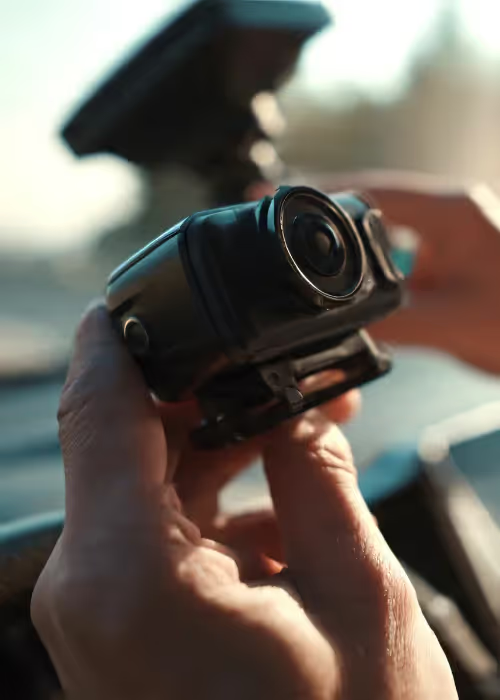
Vehicle tracking software provides real-time journey data that makes mileage auditing straightforward and accurate. Dash cams add an additional layer of protection, capturing footage that can be critical if an incident occurs involving a grey fleet vehicle.
Digital inspection tools allow drivers and managers to complete and record structured pre-use checks before every journey, creating a documented audit trail that demonstrates duty of care in practice.
Take Control of Your Gray Fleet
Managing a gray fleet isn't just about ticking a compliance box. It gives you clearer visibility over business travel costs, protects your business legally, and ensures every driver on the road on your behalf is doing so safely.
Implementing the right technology reduces the administrative burden of licence checks, mileage auditing, and vehicle inspections, whilst improving accuracy and creating a documented audit trail that demonstrates duty of care.
Ready to get better control of your gray fleet? Contact us for a free, no-obligation quote to see how RAM can give you complete journey visibility, accurate mileage data, and peace of mind.
FAQs
What is the difference between a gray fleet and a company fleet?
A company fleet consists of vehicles owned or leased by the business. A gray fleet consists of privately owned vehicles driven by employees for business purposes. The employer's duty of care applies equally to both.
What insurance do gray fleet drivers need?
Gray fleet drivers must hold a motor insurance policy that includes business use cover. Standard personal insurance does not automatically cover business journeys. Employers should verify this for every gray fleet driver before they drive on business.
How do I reduce gray fleet costs?
Start by auditing mileage claims. Review your reimbursement rates, implement a travel hierarchy to reduce unnecessary journeys, and consider whether high-mileage drivers would be better served by a company car or salary sacrifice scheme.
What is gray fleet tracking?
Gray fleet tracking applies vehicle telematics to privately owned vehicles used for business. It enables businesses to monitor journey data, mileage, and driver behavior, supporting compliance, cost control, and duty of care documentation across the gray fleet.
About the author
Michael Hoyle is the Head of Account Management at RAM, where he leverages over 7 years of industry experience to drive customer success and operational excellence.
With a deep understanding of job management solutions and fleet tracking technology, Michael has established himself as a trusted leader in the telematics space.
His customer-centric approach and analytical mindset have helped countless businesses optimise operations, reduce costs, and improve efficiency.
Reduce costs, improve visibility, and keep your business running efficiently with RAM solutions.