What Travel Time Errors Cost US Fleets
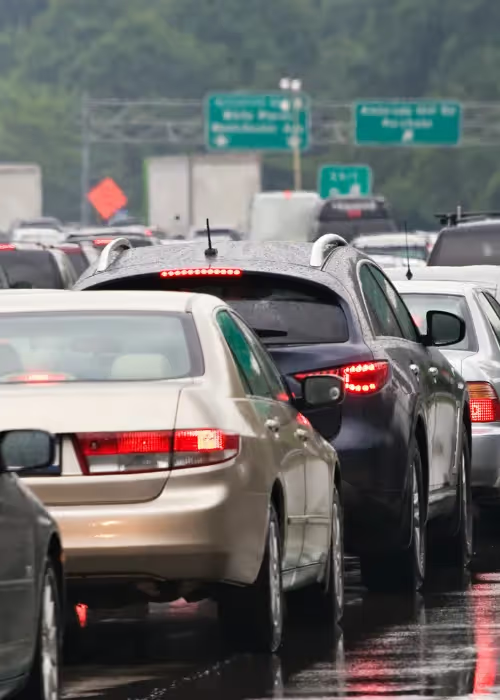
Your service truck pulls out of the yard at 8am with a two-hour drive ahead. By 11am, it's still crawling through traffic, and the customer has already called twice asking where your tech is.
It happens in fleets every day. Underestimate a drive and you're late, with an unhappy customer on the other end. Overestimate it and trucks sit idle while jobs you could have taken go to someone else. Either way, it eats into your margins.
Why Travel Time Estimates Go Wrong
Travel time mistakes rarely come down to careless planning. They happen because the usual planning methods can't keep up with what's actually happening on the road.
Common causes include:
- Traffic that changes hour by hour
- Construction zones and lane closures that appear with little notice
- Crashes that back up highways and side roads
- Weather, from summer storms to winter snow and ice
- Rush hour, school schedules and seasonal traffic
Most businesses lean on historical averages or a standard navigation app. Those tools tend to assume normal conditions, so they miss the local factors that affect your routes.
Manual scheduling makes it worse. When the day's plan is built on assumptions, one delay in the morning can push every job back by the afternoon.
Work vehicles have their own challenges, too. Delivery drivers make multiple stops, box trucks can't always take the same roads as passenger cars, and field techs need time to do the actual job, not just drive to it. Without real journey data, you're planning in the dark.
What It's Really Costing You
Travel time errors hit your business in ways you can measure and in ways that are harder to spot.
The direct costs add up quickly. As an example:
- Extra fuel - If poor routing adds $15 in fuel per truck each week, that's $780 a year per vehicle.
- Overtime - Two extra hours a week per driver at $25 an hour comes to $2,600 a year per driver.
- Missed jobs - Work you can't fit in today often goes to a competitor who can get there sooner.
The indirect costs build up over time:
- Customers who drift away after repeated late arrivals
- Negative online reviews that put off new prospects
- Drivers who rush to make up time, raising the risk of crashes
- Fewer referrals and less repeat business
One late arrival might be forgiven. A pattern of them pushes customers to look elsewhere, and each lost customer takes years of future revenue with them.
Common Mistakes When Estimating Travel Time
A few habits trip up a lot of fleet managers:
- Relying on consumer navigation apps -They're great for personal driving, but they're not designed around work vehicles. They don't always account for bridge clearances, weight limits or loading access at a customer's site.
- Using averages without context - "That job usually takes two hours" stops being true when school's in session, a stadium event lets out or road construction starts on your usual route.
- Ignoring the driver and the vehicle - A new driver needs longer than someone who's run the route for years. A fully loaded truck doesn't move like an empty one, and a service vehicle carrying heavy equipment can't match a light delivery van.
These errors stack up. As an example, being 30 minutes out each day adds up to about 130 hours a year per vehicle. Across 10 vehicles, that's around 1,300 hours, and at $30 an hour, close to $39,000 in lost productive time.
How GPS Tracking Improves Accuracy
GPS fleet tracking replaces guesswork with real data. Instead of wondering where your vehicles are, you can see what's happening across the whole fleet.
Real-time data replaces assumptions:
- Vehicle locations update every minute
- Live tracking shows actual drive times, not estimates
- Journey history reveals patterns specific to your routes
Historical data helps you plan smarter:
- See which routes work best at different times of day
- Find the quickest paths between the places you visit most
- Spot inefficiencies you didn't know were there
The wider benefits:
- Fewer late arrivals
- Lower fuel costs from better routing
- More jobs completed with accurate scheduling
- Happier customers who get reliable arrival times
What Your Tracking Data Will Show You
Once tracking is in place, a few weeks of data usually tells you more than years of rough estimates. You'll be able to see:
- How long each route really takes at different times of day
- Which jobs regularly run over and by how much
- How much time drivers spend on site compared with on the road
- Where vehicles are idling or taking longer routes than they need to
That gives you the evidence to build schedules around what actually happens, rather than what you hope will happen.
Other Benefits of Accurate Travel Times
The financial return makes a strong case on its own. The day to day improvements are just as valuable.
Less pressure on drivers:
- Schedules reflect reality, so drivers aren't set up to fail
- Drivers arrive focused rather than rushed
- A more manageable day helps with retention
Better customer experience:
- Accurate arrival windows set the right expectations
- You can update customers when a driver is running late
- Reliable timekeeping builds your reputation
Smarter business planning:
- Understand how well each vehicle is really used
- See which routes and areas bring in the most revenue
- Make better decisions about fleet size and service areas
Turning Travel Time Into an Advantage
Inaccurate travel times are one of the biggest hidden costs in running a fleet. Wasted hours, extra fuel and lost jobs chip away at profit every day.
GPS tracking gives you the data to fix it, showing exactly where vehicles are and how long each drive really takes. With that information, you can plan routes and schedules around reality.
Ready to turn travel time into profit? Get a quote and see how RAM can help your fleet run with confidence.
Frequently asked questions
How can I estimate travel times more accurately for my service routes?
Use your own vehicles' history rather than a navigation app's best guess. Take the actual drive times for each route at different times of day, add the average time spent at each stop, and build in extra time where your data shows regular delays.
Do hours of service rules apply to work vans and trucks?
Federal hours of service rules generally apply to commercial vehicles of 10,001 pounds or more used in interstate commerce. For property-carrying drivers, FMCSA sets an 11-hour driving limit within a 14-hour window. Many lighter vans fall below the threshold, but state rules may still apply, so check what covers your vehicles.
Can GPS tracking record how long drivers spend at each job?
Yes. Tracking logs when a vehicle arrives at and leaves each location, so you can see time on site alongside drive time. That gives you accurate data for scheduling and proof of arrival if a customer questions an invoice.
How often does GPS tracking update a vehicle's location?
RAM's GPS tracking updates every minute. That's frequent enough to see when a driver is falling behind and let the next customer know before they have to call you.
How much extra time should I schedule between jobs?
It depends on your routes and the time of day, so avoid adding the same cushion everywhere. Compare planned and actual drive times over a few weeks. If a route regularly runs 20 minutes long during the afternoon rush, build that into your afternoon slots only.
About the author
Richard Howard brings nearly a decade of front-line sales experience at RAM, having supported businesses across diverse sectors with their fleet management and asset tracking needs.
Throughout his nine years with RAM, Richard has developed a comprehensive understanding of the operational challenges that trades and field service businesses face daily. His client-first approach focuses on matching the right technology solutions to real-world problems, helping fleet operators gain better visibility, control costs, and protect valuable assets.
When he's not helping businesses optimize their fleets, Richard is a passionate traveller who loves exploring new destinations, experiencing live music, and discovering great food wherever he goes.
Reduce costs, improve visibility, and keep your business running efficiently with RAM solutions.