Fleet Vehicle Breakdown Management: A Guide for Fleet Managers
A vehicle breakdown is one of those operational problems that can unravel a working day very quickly. One driver stuck at the roadside can mean jobs backing up, customers left waiting, and a fleet manager scrambling to coordinate assistance with incomplete information.
For most fleets, breakdowns are an occasional reality rather than a daily occurrence. But when they happen without a clear process in place, the time and cost of dealing with them is almost always higher than it needs to be.
This guide covers what good fleet vehicle breakdown management looks like, what drivers should do at the scene, and how the right tools can take most of the chaos out of the situation.
The Coordination Problem with Fleet Breakdowns
When a breakdown happens, three parties need to be in contact at the same time; the driver, you, and the roadside assistance provider. Without a clear process, that coordination quickly becomes a problem.
The driver may not have breakdown service details to hand, you cannot act until the driver calls in with a location and fault description, and by the time everything is pieced together, significant time has already been lost.
Every minute the vehicle is off the road has a direct impact on jobs, revenue, and customer commitments.
What Drivers Should Do When a Vehicle Breaks Down
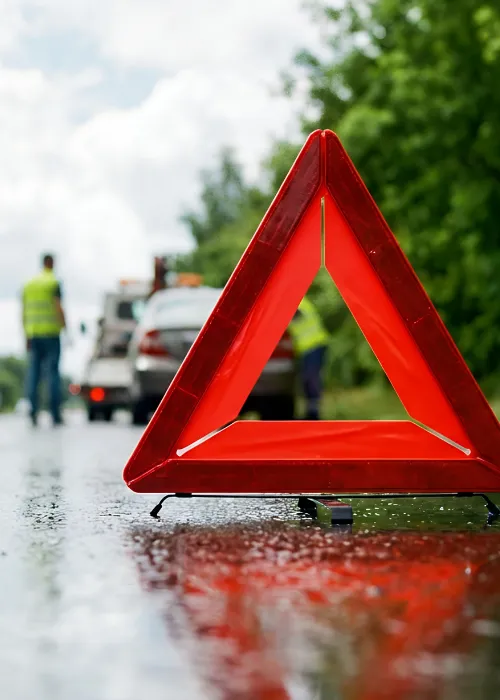
When drivers know exactly what to do at the scene, it removes a lot of the uncertainty and makes it easier for you to respond quickly. Here are the steps drivers should take:
- Move the vehicle to a safe location where it is not blocking traffic, if it is safe to do so.
- Switch on hazard lights immediately to alert other road users.
- Stay with the vehicle unless it is unsafe to do so, for example on a live motorway hard shoulder, in which case exit via the passenger side and wait behind the barrier.
- Do not attempt a roadside repair unless it is something simple and safe such as a tyre change in a safe location.
- Report the breakdown through the driver app, including the vehicle details, location, and a description of the fault.
- Contact the roadside assistance provider using the breakdown cover details available through the app.
- Notify you of any updates from the assistance provider, including estimated arrival times.
The Information Fleet Managers Need to Act Fast
When a breakdown is reported, you need to move quickly. The key information required is:
- Exact vehicle location - a postcode or GPS pin rather than a vague description of the road
- The nature of the fault - to brief the assistance provider accurately
- Which breakdown cover applies - some fleets operate multiple providers depending on vehicle type
- Whether the driver is safe - particularly important for motorway breakdowns or late-night incidents
- Whether any cargo or equipment is at risk - relevant for refrigerated vehicles or high-value loads
Without a digital fleet management system, collecting all this data relies on the driver to provide accurate information quickly, which is not always realistic.
How Digital Breakdown Reporting Changes the Process
The RAM driver app handles breakdown reporting as part of a structured digital workflow. When a breakdown occurs, the driver selects their vehicle in the app and submits a breakdown report that captures all of the key information in one place.
The vehicle's GPS location is pulled in automatically, so you will receive an accurate location without the driver needing to describe where they are. Breakdown service details for that vehicle are also available within the app, meaning the driver is not left searching for a policy number at the roadside and you have everything needed to contact the assistance provider straight away.
RAM Assist works alongside vehicle tracking, so you can also see the vehicle's location on the map in real time, monitor whether the vehicle has moved, and track the driver's status throughout the incident.
Reducing Breakdowns With Better Maintenance
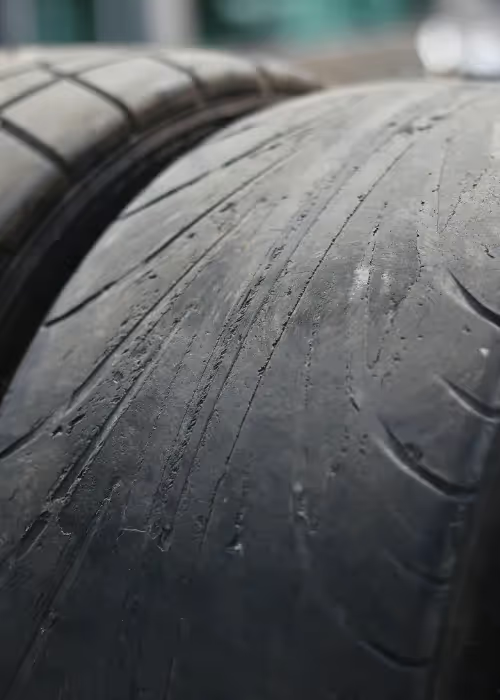
Not all breakdowns are avoidable, but a significant proportion are. Tyre failures, battery issues, and service-related faults are among the most common causes of fleet breakdowns, and many of them can be caught before they become a problem on the road.
Fleet maintenance tracking keeps service intervals, MOT dates, and vehicle health records in one place, with automated reminders so nothing gets missed. When drivers complete daily vehicle checks through the driver app, any defects are flagged immediately, and you can decide whether the vehicle should be taken off the road before it causes a bigger problem.
How Higham Roofing Reduced Unexpected Breakdowns
Higham Roofing and Construction shifted from a reactive to a proactive maintenance approach after implementing RAM across their 20-plus vehicle fleet. The result was fewer unexpected breakdowns and greater confidence in the condition of their vehicles day to day.
RAM has given us a lot of confidence in tracking and traceability of the fleet. That's been a great confidence boost.
Getting Started With Fleet Breakdown Management
Effective fleet vehicle breakdown management comes down to two things: having a clear process drivers can follow without thinking and giving you the information they need to act without delay.
If you would like to see how RAM handles breakdown reporting for your fleet, book a demo and we can walk you through it.
Frequently Asked Questions
What should a driver do first if their vehicle breaks down on a motorway?
Move to the hard shoulder, if possible, switch on hazard lights, and exit the vehicle via the passenger side door. Wait behind the barrier rather than beside the vehicle. Call for assistance using the emergency phone on the hard shoulder or contact your manager through the driver app.
Does breakdown reporting come as standard with RAM?
Breakdown reporting is available as part of the Plus package, which includes the full fleet management driver app. If you are unsure which package is right for your fleet, explore our prices, or you can ask during a demo.
What are the most common causes of fleet breakdowns?
Tyre failures, flat batteries, and missed service intervals account for a large proportion of fleet breakdowns. Many of these can be caught before they become a roadside problem through regular vehicle checks and proactive maintenance scheduling, both of which are built into the RAM driver app.
Does breakdown reporting work for all vehicle types?
Yes. Our fleet manger software works across vans, HGVs, and cars, so mixed fleets are covered within the same system. Reports are submitted per vehicle, with the relevant breakdown cover details and GPS location attached automatically regardless of vehicle type.
How does breakdown reporting fit into a wider fleet compliance process?
Breakdown reporting sits alongside daily vehicle checks, fleet maintenance tracking, and mileage reporting as part of a broader compliance picture. Having a digital record of every reported breakdown, including the fault, location, and response time, can be useful for insurance purposes, operator licence reviews, and internal fleet audits.
About the author
Richard Howard brings nearly a decade of front-line sales experience at RAM, having supported businesses across diverse sectors with their fleet management and asset tracking needs.
Throughout his nine years with RAM, Richard has developed a comprehensive understanding of the operational challenges that trades and field service businesses face daily. His client-first approach focuses on matching the right technology solutions to real-world problems, helping fleet operators gain better visibility, control costs, and protect valuable assets.
When he's not helping businesses optimise their fleets, Richard is a passionate traveller who loves exploring new destinations, experiencing live music, and discovering great food wherever he goes.
Reduce costs, improve visibility, and keep your business running efficiently with RAM solutions.