Most Fuel-Efficient Delivery Vehicles and How to Save Money
Running a delivery business means watching every penny. Fuel costs can eat into your profits fast. But the right vehicle choices and smart driving habits can transform your bottom line.
In this guide, we break down the best delivery vehicles for fuel economy and share proven ways to save money on fuel.
Top Fuel-Efficient Delivery Vans in the UK
The figures below are official WLTP combined figures. They're useful for comparing vans, but your own mpg will depend on your routes, loads and driving style.
Small Vans for Parcels and Courier Work
Ford Transit Courier
The Transit Courier is the smallest van in Ford's range, which makes it easy to park and handle on busy urban rounds. The 1.5 EcoBlue diesel returns up to 55.4mpg, putting it among the most economical small vans you can buy. It's a strong choice for couriers and parcel delivery.
Citroën Berlingo
The Berlingo has been a favourite with small fleets for years, and it's easy to see why. The 1.5 BlueHDi 100 diesel in the standard M size is rated at 46.0mpg by Fleet News. It's also available in a longer XL body, plus an all-electric version for low-emission zones.
Medium Vans for Bigger Loads
Ford Transit Custom
If you need more space, the Transit Custom was named Best Medium Van in the Parkers Van and Pickup Awards 2025. Its most economical diesel returns 39.8mpg on the WLTP combined cycle. There are also plug-in hybrid and fully electric versions if you're looking to cut fuel costs further.
Renault Trafic
The Trafic is a popular alternative to the Transit Custom, and it's also sold as the Nissan Primastar. The dCi 130 and dCi 150 diesels both have official WLTP figures of up to 40.9mpg, which makes it one of the more economical medium vans. If your routes suit an electric van, the Trafic E-Tech has a WLTP range of up to 186 miles.
Smart Ways to Cut Fuel Costs
Route Optimisation
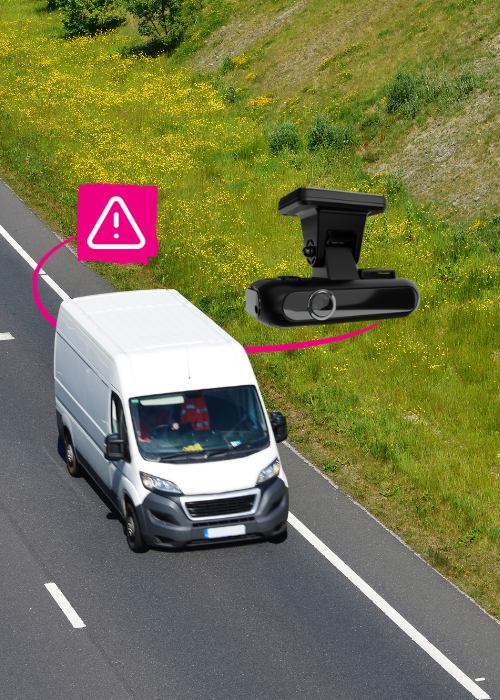
Poor route planning wastes fuel and time. Modern fleet tracking solutions help you plan efficient routes. Real-time GPS tracking shows you exactly where vehicles are.
Drivers often take longer routes without realising. Smart scheduling reduces unnecessary mileage. Every mile saved means money in your pocket.
Driver Behaviour Monitoring
Aggressive acceleration and heavy braking can increase fuel consumption by 30%.
Driver behaviour monitoring helps identify poor driving habits and regular feedback helps break them. By training your team to drive smarter, you can lower your fuel bills.
Vehicle Maintenance
Well-maintained vehicles run more efficiently, and regular servicing prevents fuel-wasting problems. Simple checks make a big difference:
- Keep tyres properly inflated
- Change air filters regularly
- Use the right engine oil
- Fix problems quickly
Using our digital vehicle checks makes maintenance scheduling simple. With RAM Tracking, you’ll also receive automated service and MOT reminders which can prevent costly breakdowns.
Fuel Card Benefits
Business fuel cards offer real savings that quickly add up for delivery fleets. With RAM Tracking, you get guaranteed savings of 5p or 10p per litre at BP stations across the UK, depending on package chosen. That's substantial money back in your business.
You'll also save time on admin since all transactions appear on a single HMRC-approved invoice, keeping your expense tracking simple and compliant.
Technology Solutions That Save Money
Real-Time Tracking
GPS vehicle tracking systems eliminate wasted miles by showing you exactly where your fleet is at all times. When integrated with job management systems, dispatchers can automatically assign drivers to the nearest available job, cutting unnecessary travel and fuel costs.
You'll also boost customer satisfaction by providing accurate arrival times, and happy customers mean repeat business.
Idle Time Monitoring
Vehicles idling waste fuel and money. Fortunately, modern tracking systems alert you to excessive idling, helping you reduce costs.
Simple driver training eliminates unnecessary idling. Every minute you save directly reduces your fuel bill.
Automated Reporting
Manual fuel tracking takes time and often misses details. Automated reporting systems provide accurate fuel consumption data, so you can see which vehicles have the highest operating costs. This data lets you make decisions about future vehicle purchases and helps you replace inefficient vehicles before they impact your bottom line.
Calculating Your Savings
Work out potential savings before making changes:
- Current average mpg across your fleet
- Monthly fuel costs per vehicle
- Potential improvement with efficient vehicles
- Annual savings projection
Small improvements will make a big difference over time. A 5 mpg improvement on a high-mileage vehicle saves hundreds yearly.
Making the Right Choice
Consider your specific needs:
- Delivery area size and type
- Package sizes and weights
- Daily mileage requirements
- Budget constraints
The most efficient vehicle isn't always the cheapest to buy. Calculate total cost of ownership including fuel, maintenance, and depreciation.
Start Saving Today
Fuel efficiency improvements don't require massive investment. Simple changes deliver immediate results:
- Train your drivers on efficient driving techniques
- Implement basic route planning
- Monitor vehicle maintenance schedules
- Track fuel consumption regularly
Contact our team to discuss how fleet management technology can reduce your fuel costs. Our solutions help businesses save thousands annually through better vehicle utilisation and driver management.
Smart businesses invest in efficiency. Every pound saved on fuel goes straight to your bottom line, so start making those savings today.
Frequently asked questions
What are the speed limits for delivery vans in the UK?
It depends on the van. Car-derived vans up to 2 tonnes laden weight follow the same limits as cars. Larger goods vehicles up to 7.5 tonnes are limited to 50mph on single carriageways, 60mph on dual carriageways and 70mph on motorways. You'll find the full table under Rule 124 of the Highway Code.
What speed uses the least fuel?
Lower speeds generally use less fuel. According to the AA, driving at 70mph uses up to 9% more fuel than driving at 60mph, and up to 15% more than at 50mph. Pushing on to 80mph can use up to 25% more than at 70mph.
How much can eco driving save on fuel?
More than most people expect. When 50 AA staff followed eco-driving advice for a week, they cut their fuel bills by 10% on average, and the best performer saved 33%.
Should drivers switch off their engine at every delivery stop?
If the stop will last more than a couple of minutes, yes. Rule 123 of the Highway Code says drivers should switch off when they're likely to be stationary for longer than that. It soon adds up, as idling for an hour can waste half a gallon of fuel or more.
How do I work out my van's real mpg?
Fill the tank and note the mileage. Keep a record of every litre you add, then fill to the same level at the same pump. Divide the miles covered by the litres used, then multiply by 4.546. The AA gives a simple worked example: 1,000 miles on 101 litres works out at about 45mpg.
Is a fuel card worth it for a small delivery business?
For most delivery firms, yes, because the savings grow with every litre. The easiest way to check is to put your monthly spend into our fuel card calculator. Our complete guide to business fuel cards explains how they work.
How much fuel can a fleet management system save?
RAM customers see 15% fuel savings on average. Our fuel management system links fuel spend to real journeys, so you can see which vehicles and drivers are idling, speeding or using more fuel than they should.
About the author
Richard Howard brings nearly a decade of front-line sales experience at RAM, having supported businesses across diverse sectors with their fleet management and asset tracking needs.
Throughout his nine years with RAM, Richard has developed a comprehensive understanding of the operational challenges that trades and field service businesses face daily. His client-first approach focuses on matching the right technology solutions to real-world problems, helping fleet operators gain better visibility, control costs, and protect valuable assets.
When he's not helping businesses optimise their fleets, Richard is a passionate traveller who loves exploring new destinations, experiencing live music, and discovering great food wherever he goes.
Reduce costs, improve visibility, and keep your business running efficiently with RAM solutions.