Fleet Tracking vs Fleet Management Software
Fleet tracking and fleet management software often get talked about as if they're the same thing. They're closely linked, but they do different jobs.
Tracking tells you where your vehicles are and how they're being driven. Fleet management software takes that data and adds the tools you need to actually run the fleet, from vehicle checks and service reminders to driver licence checks and fuel records.
In this guide, we'll explain the difference in plain terms, show where the two overlap, and help you work out which one your business needs right now.
What is the Difference Between Fleet Tracking and Fleet Management Software
Fleet tracking answers one question: where are my vehicles, and what are they doing? Fleet management software answers a bigger one: is my fleet safe, legal and cost effective, and what needs doing next?
The two work well together, but they do different jobs. The real question is whether location data alone is enough for your business, or whether you also need tools to handle everyday admin and compliance.
What Does Fleet Tracking Do?
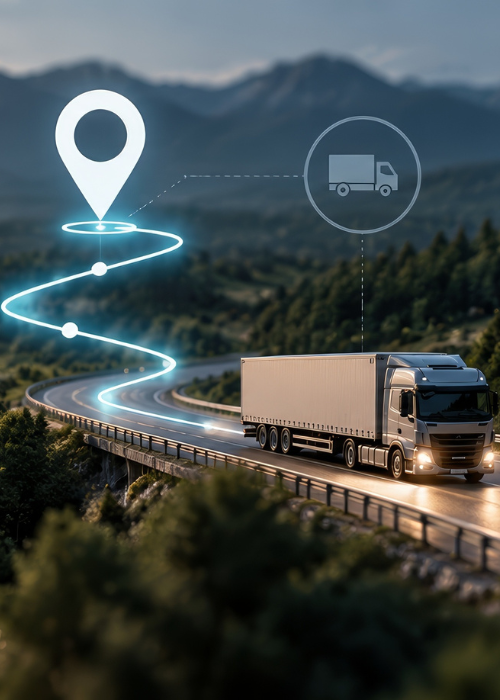
A fleet tracker is a small GPS device fitted to each vehicle. It works out its position using satellites, then sends that data over the mobile network to an online platform you can check from a computer or phone. With RAM, vehicle positions refresh every minute on our Core and Plus packages.
If you want to know more about how the technology works behind the scenes, our guide to telematics explained covers it in more detail.
A typical fleet tracking system gives you:
- Live location of every vehicle on one map
- Journey history showing routes, stops and time on site
- Mileage reports, including business and private mileage
- Driver behaviour monitoring for speeding, harsh braking and idling
- Geofence alerts when a vehicle enters or leaves an area you've marked out
Tracking is at its best when you need visibility. It helps you answer a customer asking where their engineer is, find a stolen van quickly, or prove a vehicle was on site at a certain time.
What Does Fleet Management Software Add?
Tracking gives you raw data. Fleet management software gives you a way to act on it. It brings the admin side of running vehicles into the same place as the location data, so fewer jobs live in spreadsheets, inboxes and paper files.
On top of tracking, a fleet management system usually adds:
- Digital vehicle checks completed by drivers on their phone, with photos of any defects
- Service and MOT reminders so renewals don't slip through the cracks
- DVLA licence checks run on a set schedule
- Fuel management that matches fuel spend to real journeys
- Breakdown and accident reporting with the driver's location and photos from the scene
- Clock on and off with proof of attendance
Much of this runs through a fleet management app on the driver's phone. That's a big shift. Tracking is something that happens to the vehicle in the background, while fleet management software gives drivers a part to play too.
Fleet Tracking and Fleet Management Software Compared
Here's how the two line up, side by side.
Why Compliance Is Often the Tipping Point
For many businesses, the move from tracking to full fleet management comes down to compliance.
HSE guidance on managing road risk says employers must make sure vehicles are fit for purpose and kept in a safe condition. Drivers also need to be competent, properly trained and fit to drive.
For goods and passenger vehicle operators, the DVSA Guide to Maintaining Roadworthiness sets out responsibilities for daily checks, inspections, maintenance and record keeping. It applies whatever the size of your fleet.
Here's the gap. A tracker can prove where a van went this morning. It can't prove anyone checked the tyres before it left. Fleet management software fills that gap with a dated record of every check, every reported defect and what happened next.
Signs You've Outgrown Basic Tracking
Tracking on its own works well for a while. These are the signs it might be time to add fleet management tools:
- You're chasing drivers for paper check sheets at the end of the week
- Service and MOT dates live in a spreadsheet, or in one person's head
- Licence checks only happen when someone remembers
- Fuel receipts turn up in a pile at month end and nobody can match them to journeys
- Weekly reporting takes hours of manual work
CK Rail Solutions is a good example. Their previous system could only show vehicles on a map, which Road Rail Development Manager Mick Quigley said fell far short of what they and their clients needed.
After moving to RAM's fleet management tools, automated reporting now saves the team 25 to 30 hours a week on paperwork. Timely maintenance notifications have also removed more than 50 hours of unplanned vehicle downtime each month.
When Fleet Tracking on Its Own Is Enough
Full fleet management software isn't always needed on day one. Tracking alone can be the right fit if:
- Your main concern is vehicle security and theft recovery
- You mostly need accurate mileage records, including private use
- You want quick answers when customers ask for arrival times
- You run a small fleet and already have a simple, working process for checks and servicing
Plenty of businesses start here and build up over time. Rilmac Group began with basic trackers on their scaffolding fleet nine years ago. They later added driver behaviour insight and connected dash cams, then rolled RAM out across the wider group.
Getting Driver Privacy Right With Either Option
Whichever route you choose, you're collecting data about your drivers. Location, speed and stop times can all be linked back to a person.
This matters to staff. Research commissioned by the ICO found 70% of people would find it intrusive to be monitored by an employer. The ICO's guidance says data protection law doesn't stop monitoring, but employers should:
- Tell workers about the nature, extent and reasons for monitoring in a way that's easy to understand
- Have a clearly defined purpose and use the least intrusive way to achieve it
- Only keep information that's relevant to that purpose
- Carry out a Data Protection Impact Assessment where monitoring is likely to be high risk
It also helps to explain what drivers get out of it. A digital check record protects them if a defect is missed later. A breakdown report with their exact location gets help to them faster. For more on the legal side, read our guide to vehicle tracking laws for UK businesses.
How RAM Brings Tracking and Fleet Management Together
At RAM, you can start with tracking and add fleet management tools as your needs grow. You don’t have to pay for features you won’t use straight away.
Our vehicle tracking packages are split into three levels. Lite gives smaller fleets basic visibility and reminders. Core adds faster location updates, mileage reports, driver behaviour monitoring and geofencing. Plus brings in the full driver app, so drivers can complete vehicle checks, report defects and log breakdowns or accidents from their phone.
Not sure which package fits? Our ROI calculator shows you how much your business could save.
Choose the Right Fleet Tool for Your Business
Fleet tracking shows you where your vehicles are. Fleet management software helps you keep them safe, legal and on the road. If visibility is all you need today, tracking is a solid starting point. If you're juggling checks, renewals and paperwork, it's worth looking at the full picture.
Ready to take control of your fleet? Book a demo to see our systems in action and learn how they work for your business.
Fleet Tracking vs Fleet Management Software FAQs
Is fleet tracking the same as fleet management software?
No, fleet tracking is not the same as fleet management software. Tracking shows where vehicles are and how they're driven. Fleet management software includes tracking, then adds tools such as vehicle checks, service reminders, licence checks and incident reporting.
Do I need fleet management software if I already have trackers?
You need fleet management software if you already have trackers but still manage checks, servicing or licence checks on paper or in spreadsheets. If those processes already work well and visibility is your main need, tracking alone may be enough for now.
Can a small business use fleet management software?
Yes, a small business can use fleet management software. The DVSA's roadworthiness guidance applies whatever the size of your fleet, so a simple digital record of checks and servicing can be just as useful with five vans as with fifty.
Can fleet management software replace paper vehicle check sheets?
Yes, fleet management software can replace paper vehicle check sheets. Drivers complete their checks in an app, add photos of any defects, and managers see the results straight away instead of waiting for paperwork to come back to the office.
Can I start with tracking and add fleet management later?
Yes, you can start with tracking and add fleet management later. With RAM, you can begin on a tracking package and move up to Plus when you want driver checks, defect reporting and incident tools.
About the author
Michael Hoyle is the Head of Account Management at RAM, where he leverages over 7 years of industry experience to drive customer success and operational excellence.
With a deep understanding of job management solutions and fleet tracking technology, Michael has established himself as a trusted leader in the telematics space.
His customer-centric approach and analytical mindset have helped countless businesses optimise operations, reduce costs, and improve efficiency.
Reduce costs, improve visibility, and keep your business running efficiently with RAM solutions.