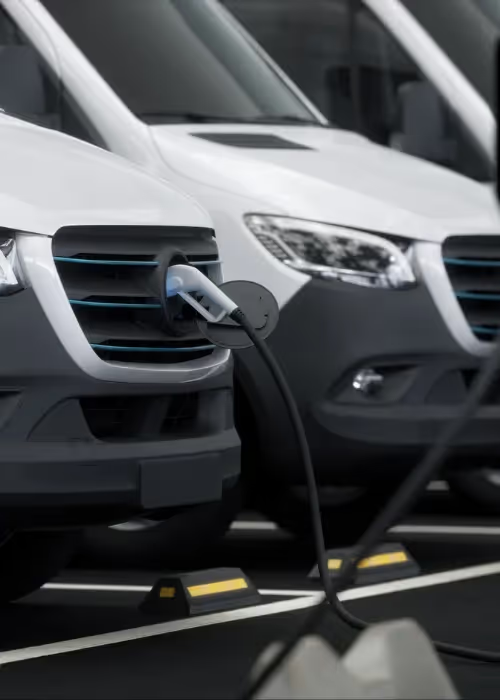
EV Vans for Business: The ROI Case
Fleet Management Technology & ROI
Smart fleet management software transforms these cost calculations by providing real data instead of estimates.
Vehicle tracking systems provide precise data on daily mileage patterns, route efficiency, and maintenance needs. This data helps you choose the right electric vehicle range for your needs and quantify actual savings rather than relying on estimates.
Factors That Improve Electric Vehicle ROI
Electric vehicles encourage better operational practices that boost returns. Fleet management software helps optimise routes to maximise electric vehicle range. This reduces unnecessary mileage, and tracks driver performance for improved energy efficiency.
Digital compliance systems also automatically maintain records, reducing administrative costs and penalty risks.
Government Incentives Impact ROI
Factor in available support:
- Plug-in Van Grant (up to £2,500 for small electric vans)
- Enhanced Capital Allowances (100% first-year tax relief)
- Workplace Charging Scheme grants
These incentives directly improve your ROI calculation by reducing initial costs.
Measuring Success: Key ROI Metrics
Track these metrics to validate your electric vehicle investment:
Financial Metrics:
- Cost per mile
- Monthly fuel savings
- Maintenance cost reduction
- Insurance premium changes
Operational Metrics:
- Vehicle utilisation rates
- Route efficiency improvements
- Downtime reduction
- Driver satisfaction scores
Compliance Metrics:
- Emissions reductions
- Penalty avoidance
- Audit readiness
- Safety improvements
Making Your Decision
Step 1: Gather Current Data
Install fleet management systems to understand your baseline costs and usage patterns.
Step 2: Calculate True Costs
Use the complete ROI formula, including all operational factors, not just purchase price.
Step 3: Start Small and Scale
Trial electric vehicles on your most suitable routes first, then expand based on proven ROI results.
Making Electric Vehicles Work for Your Business
Electric commercial vehicles deliver strong ROI when you look beyond purchase price. The key is understanding your complete cost structure and measuring real-world performance.
Smart fleet managers use data-driven approaches to make informed decisions. They combine electric vehicles with intelligent fleet management software to maximise returns.
The transition requires careful planning and accurate measurement. But for businesses with suitable operations, electric vehicles offer significant long-term financial benefits.
Ready to calculate your fleet's electric vehicle ROI? Start by gathering accurate data on your current operations. With our EV tracking system, you can track expenses more accurately which can improve ROI. Get a quote today.
About the author
Richard Howard brings nearly a decade of front-line sales experience at RAM, having supported businesses across diverse sectors with their fleet management and asset tracking needs.
Throughout his nine years with RAM, Richard has developed a comprehensive understanding of the operational challenges that trades and field service businesses face daily. His client-first approach focuses on matching the right technology solutions to real-world problems, helping fleet operators gain better visibility, control costs, and protect valuable assets.
When he's not helping businesses optimise their fleets, Richard is a passionate traveller who loves exploring new destinations, experiencing live music, and discovering great food wherever he goes.
Reduce costs, improve visibility, and keep your business running efficiently with RAM solutions.