
By RAM Tracking on 20 Mar 2026
By Richard Howard, Sales Manager, RAM Tracking
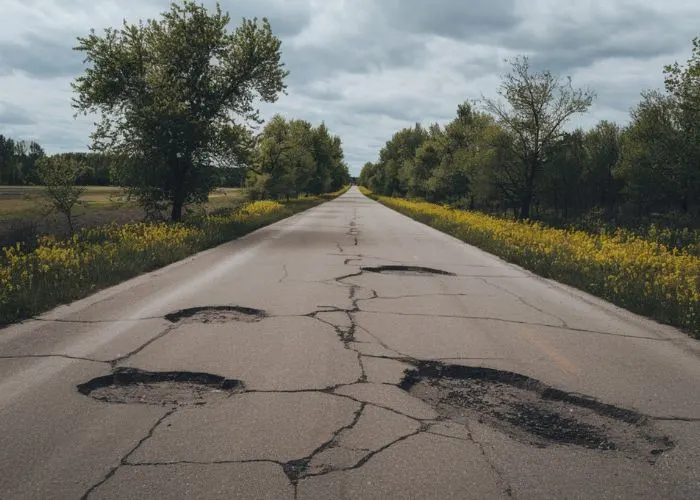
Potholes are a persistent problem on UK roads, and the cost of getting caught out by one is rising. The average pothole damage claim now stands at around £4,000, a 55% increase compared to five years ago, with inflation and advances in vehicle technology both contributing to more expensive repairs. For fleet operators running multiple vehicles, those costs can add up quickly.
The good news is that you may be entitled to compensation. This guide explains exactly how to make a pothole damage claim in the UK, who to contact, and how to give yourself the best chance of success.
Yes, in many cases, you can. The law is clear: whoever is responsible for maintaining a road has a legal duty to keep it in a fit and safe condition. If they fail to do so and your vehicle is damaged as a result, they may be liable.
That said, rejection rates are high. 77% of pothole compensation claims made to councils in some areas of England in 2023-24 were rejected. Councils often rely on Section 58 of the Highways Act, which allows them to avoid liability if they can demonstrate they were unaware of the pothole or had reasonable inspection procedures in place. Strong evidence is what makes the difference.
Your chances of a successful claim improve if the pothole has already been reported by another driver. Several websites allow you to check whether a pothole at a specific location has previously been reported, and it is worth searching before you submit your claim. If a report exists and the authority failed to act on it, liability becomes much harder for them to deny.
The stronger your evidence, the stronger your claim. As soon as it is safe to do so, start documenting everything. Here is what to capture:
The pothole itself, showing depth and width clearly. Use a tape measure or a standard-sized object to show the depth in your photos.
The surrounding area, including nearby road signs or landmarks that pinpoint the exact location.
The damage to your vehicle. However, do not walk on a motorway or dual carriageway to do this.
The exact time, date, and weather conditions at the time of the incident.
A written statement from any witnesses, if they are willing to provide one.
Be aware that definitions of what counts as a pothole vary significantly between councils in England. Some councils qualify a defect at 20mm deep as a pothole, while others require at least 50mm. Minimum width requirements range from 150mm to 300mm depending on the area.
Fewer than one in ten drivers know what size qualifies as a pothole in their local area, so it is worth checking your council's specific threshold before you claim.
You also have a civic duty to report the pothole. Doing so warns other drivers and adds further weight to your claim.
Once your vehicle has been repaired, keep a dated, itemised copy of the bill. If your mechanic can confirm in writing that the damage was caused by a pothole impact, include that too. It strengthens the causal link between the defect and the damage, which authorities will look to dispute.
Remember: you are claiming back what you spent on repairs, not seeking general compensation.
The authority responsible for your claim depends on the type of road and where in the UK you are. If you are unsure, start by contacting your local council or National Highways.
Local roads, B roads, and smaller A roads (England, Wales, Scotland): your local council is responsible. Find your local council online by entering your postcode. Many councils have a fast claims process on their website, and some will post you a form to complete.
Major A roads, trunk roads, and motorways (England): contact National Highways on 0300 123 5000 or via their website. They will issue a claim form within 15 days and respond within 90 days.
Red Routes (Greater London): contact Transport for London on 0343 222 1234. Separate forms are available for cyclists and drivers.
A roads and motorways (Scotland): responsibility depends on the area. Bear Scotland covers the north east and north west (0800 028 1414), Scotland Transerv covers the south west (0141 218 3800), and Amey covers the south east (0800 521 660). Follow up directly if you have not received a claim form.
Trunk roads and motorways (Wales): contact Traffic Wales on 0300 123 1213. Contact them if your claim form and information pack have not arrived.
All roads (Northern Ireland): contact Transport NI on 028 9054 0540 or through the Transport NI website, where you can download a claim form directly.
Private roads and car parks: contact the owner or management company directly.
Use the authority's own claims process where possible, as it is usually the quickest route. Include all of your evidence: photographs, the repair bill, any witness statements, and a clear account of what happened.
Many claimants also include a short covering letter summarising their case and making clear they intend to take the matter further if compensation is not offered. Keep the tone factual and firm.
Be prepared for a wait. If you receive a partial offer, you can choose to accept it or continue pursuing the full amount. If your claim is rejected outright, you can still challenge the decision, particularly if you can demonstrate that the road had been reported as defective before the incident.
It depends. Claiming through your insurer is simpler and faster, but it may affect your no-claims bonus and future premiums, even if you only notify them and do not ultimately claim. There are a few key rules to keep in mind:
You can claim from the responsible authority or your insurer, but not both. Any compensation received from an authority will be used to reimburse the insurer if you have already claimed with them.
If you notify your insurer promptly after the incident, you typically have up to five months to decide whether to pursue an insurance claim, depending on how your authority claim progresses.
If you only have third-party cover, you cannot claim for vehicle damage through your insurer and will need to pursue the responsible authority directly.
For fleet operators, pothole damage is an unwanted but unavoidable cost. RAM Live dash cams record continuous footage of the road ahead, giving you clear video evidence of exactly when and where an incident occurred.
Combined with GPS location and time data from a vehicle tracker, you have a far stronger foundation for any pothole damage claim.
Ready to protect your fleet from the road ahead? Contact us for a free, no-obligation demo to see how RAM Tracking helps businesses across the UK stay one step ahead on every journey.
Richard Howard brings nearly a decade of front-line sales experience at RAM Tracking, having supported businesses across diverse sectors with their fleet management and asset tracking needs.
Throughout his nine years with RAM, Richard has developed a comprehensive understanding of the operational challenges that trades and field service businesses face daily. His client-first approach focuses on matching the right technology solutions to real-world problems, helping fleet operators gain better visibility, control costs, and protect valuable assets.
When he's not helping businesses optimise their fleets, Richard is a passionate traveller who loves exploring new destinations, experiencing live music, and discovering great food wherever he goes.
There is no single fixed deadline, but it is best to act quickly. Evidence degrades, potholes get repaired, and witness memories fade. Most legal advisors recommend submitting your claim within three months of the incident.
You can challenge the decision. If you can show that the pothole had previously been reported and the authority failed to act, or that the road was not being maintained to a reasonable standard, you have grounds to escalate. You may also wish to seek independent legal advice.
Yes, if you have comprehensive cover. It is a simpler process than claiming from the authority, but it may affect your no-claims bonus and future premiums. You cannot claim from both your insurer and the responsible authority.
It depends on the road. Local councils maintain local roads and smaller A roads, National Highways is responsible for major A roads and motorways in England, and separate organisations cover Scotland, Wales, and Northern Ireland. See Step 3 for a full breakdown.
Yes. Video evidence of the incident, combined with GPS location and time data, significantly strengthens your case and removes any ambiguity about where and when the damage occurred.
Do you have a question? Ask us anything
