
By RAM Tracking on 23 Oct 2025
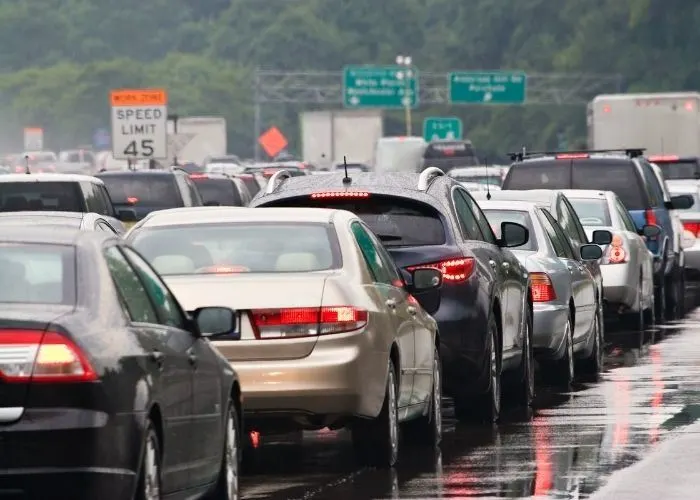
Your delivery van leaves the depot at 8am. The driver expects a two-hour journey. Three hours later, he's still stuck in traffic, and your customer is furious.
This scenario plays out in fleet operations every single day. When you underestimate journey times, deliveries arrive late and customers complain. When you overestimate times, vehicles sit idle and you miss out on potential jobs. Both scenarios drain profit from your business.
Travel time errors don't happen because fleet managers are careless. They happen because traditional planning methods simply can't account for reality.
Common causes include:
Traffic conditions that change constantly throughout the day
Roadworks appearing overnight without warning
Unexpected accidents causing delays
Weather conditions slowing journey times
Rush hour patterns and seasonal variations
Most businesses rely on historical averages or standard route planners. These tools assume ideal conditions, but they don't factor in the real-world variables that affect your specific routes.
Manual scheduling can make things worse. When routes are based on assumptions instead of data, one delay can throw off the entire day.
Fleet operations face unique challenges, too. Light commercial vehicles navigate different routes from cars, with delivery drivers often making multiple stops. Field service engineers need time for actual work, not just travel.
Without real-time tracking data, you're essentially planning blind.
Let's talk numbers. Travel time errors cost your business in ways you can see and ways you can't.
Direct costs add up fast:
Wasted fuel: £10 extra per van weekly = £2,600 annually per vehicle
Overtime payments: 2 hours extra per driver weekly at £15/hour = £15,600 annually for your team
Lost jobs: Missed opportunities go straight to competitors with better time management
Indirect costs also damage long-term growth:
Losing customers from repeated late arrivals
Brand reputation damage from negative reviews
Higher insurance premiums when drivers rush
Lost referrals and future business
Losing customers happens quietly. One late delivery might be forgiven. Repeated tardiness sends customers to your competitors. Each lost customer represents years of potential revenue.
Brand reputation takes time to build and seconds to damage as negative reviews spread quickly. When customers search for your business and see complaints about unreliability, new prospects choose someone else.
Most fleet managers make the same critical errors when planning routes and schedules.
Over-reliance on consumer route planners: Google Maps works brilliantly for personal travel. It doesn't understand commercial vehicle requirements like height restrictions, weight limits, or delivery access issues.
Using historical averages without context: "That job usually takes two hours" becomes dangerous when traffic patterns shift. School terms, seasonal tourism, and local events all cause variations.
Ignoring driver behaviour and vehicle limitations: New drivers need more time than experienced team members, and loaded vehicles travel differently than empty ones. Service vehicles carrying heavy equipment also can't match the speed of empty delivery vans.
These mistakes compound over time. One 30-minute error per day equals 130 hours annually per vehicle. For a fleet of 10, you're losing 1,300 hours of productive time every year. At £25 per hour, that's £32,500 in wasted time.
Modern vehicle tracking transforms guesswork into certainty. Instead of wondering where your vehicles are, you know exactly what's happening across your entire fleet. Real-time data replaces assumptions.
GPS and telematics provide real-time monitoring:
Exact vehicle location every minute
Live tracking shows actual journey times instead of estimates
Historical data reveals patterns specific to your operations
Data-driven route optimisation changes everything:
System learns which routes work best at different times
Identifies fastest paths between common destinations
Spots inefficiencies you never knew existed
Redirects drivers around accidents and road closures immediately
The benefits extend beyond tracking:
Late arrivals decrease dramatically
Fuel costs drop with optimal routing
Productivity improves with accurate scheduling
Customer satisfaction increases with live location sharing
CK Rail's 70-vehicle fleet struggled with a critical problem. Dispatchers guessed arrival times based on outdated assumptions. Manual timesheet processing consumed 25-30 hours weekly. Without accurate travel time data, billing depended entirely on driver reports rather than verified information.
After implementing fleet tracking with automated reporting and time-on-site verification, everything became measurable. The system showed exactly how long journeys actually took. Real-time data replaced guesswork. Automated reporting eliminated the administrative burden entirely.
The results were significant. CK Rail achieved £300 monthly savings per vehicle by optimising routes and eliminating wasted travel time. Those savings added up to £50,000 annually. More importantly, they could finally schedule with confidence, knowing actual journey times instead of estimates.
This represents what becomes possible when you replace assumption with data.
The financial returns justify vehicle tracking on their own. The operational improvements make it indispensable.
With improved driver wellbeing:
Schedules reflect reality, eliminating impossible timelines
Drivers arrive focused rather than frantic
Better work-life balance improves retention
With increased customer satisfaction:
Accurate arrival windows set proper expectations
Real-time updates keep customers informed
Consistent punctuality builds reputation
Business planning becomes data-driven:
Understand true vehicle utilisation rates
Identify which routes generate most revenue
Make informed decisions about fleet size and service areas
Travel time errors represent one of the largest hidden costs in fleet operations. Those wasted hours, unnecessary fuel expenses, and lost jobs drain profit every single day.
Vehicle tracking solves this problem completely. GPS monitoring shows exactly where vehicles are and how long journeys actually take. Route optimisation ensures every journey follows the most efficient path.
Ready to turn travel time into profit? Get a quote from our team today to discover how RAM Tracking can help your fleet operate with certainty rather than guesswork.
Do you have a question? Ask us anything
